Some AI recommended tracks to checkout tomorrow…
—
Finding music with a true
30dB crest factor is a challenge because that is the extreme upper limit of what modern digital systems can reproduce before falling into the noise floor. Most "highly dynamic" audiophile tracks actually sit in the
18-22 dB range.
To hit 30 dB, you need recordings with a very low average "floor" and massive, uncompressed transient peaks (usually from percussion or cannons). On Tidal, you should look for the
"Max" or
"Master"(HiRes FLAC) versions of these specific recordings.
 1. The Dynamic "Gold Standard" (Classical)
Classical music is the only genre where you will consistently find crest factors approaching 30 dB.
- Tchaikovsky: 1812 Overture (Erich Kunzel & Cincinnati Pops Orchestra, Telarc):
- Why: This is the most famous high-dynamic recording in history. The digital cannons are recorded at a level so high they can literally damage speakers if played too loud. The crest factor on the cannon shots exceeds 30 dB.
- Tidal Search: "Kunzel 1812 Overture Telarc"
- Stravinsky: The Rite of Spring (Eiji Oue & Minnesota Orchestra, Reference Recordings):
- Why: Reference Recordings is a label famous for "No-Limiter" mastering. The "Danse de la terre" at the end of Part 1 features bass drum hits that provide a massive peak-to-average ratio.
- Tidal Search: "Eiji Oue Stravinsky Minnesota Orchestra"
- Mahler: Symphony No. 2 "Resurrection" (Gilbert Kaplan & Vienna Philharmonic):
- Why: The transition from the quietest choral passages to the full-scale orchestral crescendos provides an extreme dynamic workout.
 2. Audiophile Percussion & Test Discs
Specialized recordings designed to test high-end equipment often preserve the full 25-30 dB crest factor of live instruments.
- The Sheffield Lab Test Disc - "My Disc" (Various Artists):
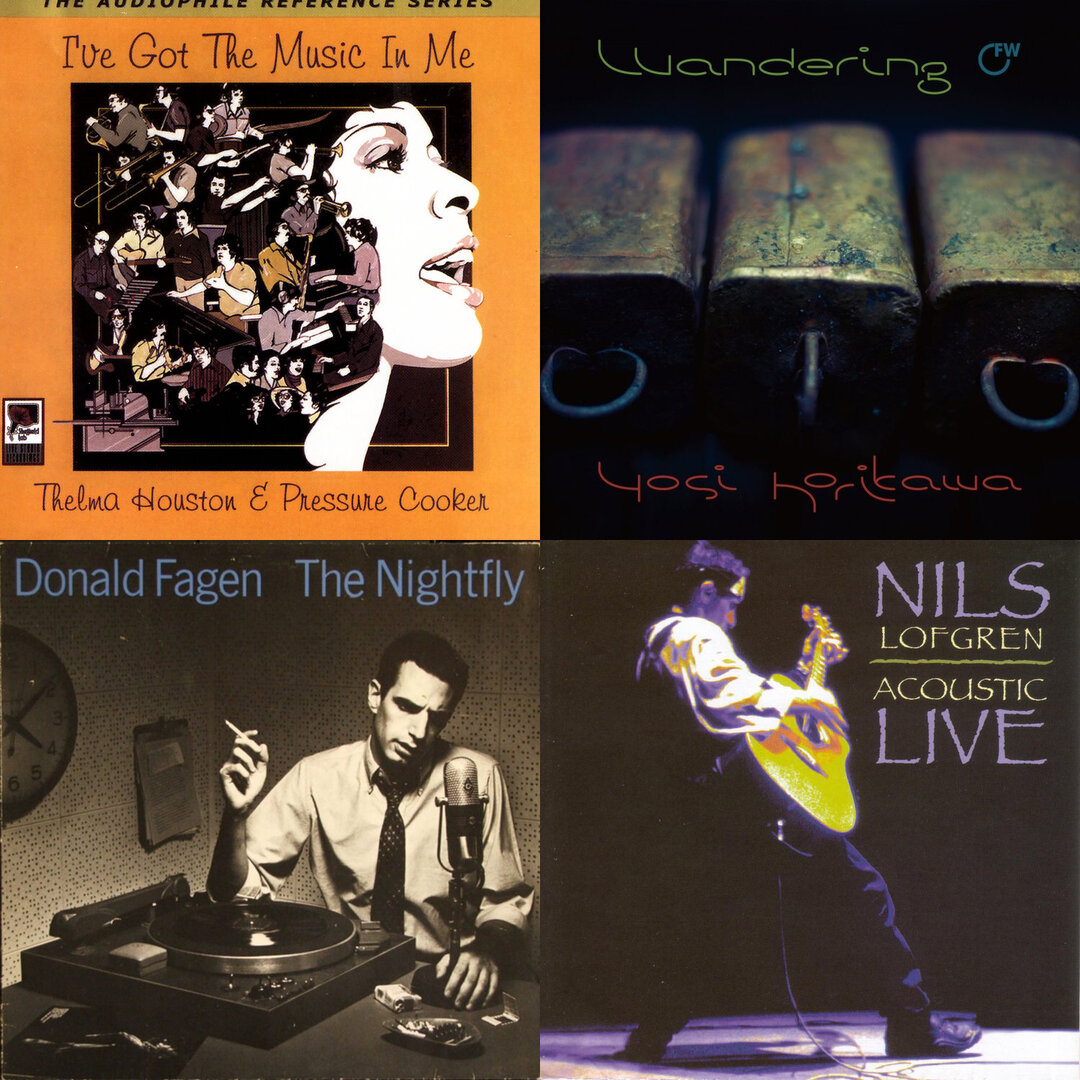
- Why: Specifically track 2 ("Dish Rag" by Thelma Houston) or the percussion-only tracks. Sheffield Lab used "direct-to-disc" techniques that bypassed most compression stages.
- Tidal Search: "Sheffield Lab My Disc"
- Kodo: Mondo Head (Mickey Hart & Kodo):
- Why: These are Japanese Taiko drummers. The initial "crack" of the drumstick followed by the massive low-frequency resonance of the O-daiko drum creates enormous transients.
- Tidal Search: "Kodo Mondo Head"
- Yosi Horikawa: "Letter" or "Bubbles" (Wandering):
- Why: Though electronic, Horikawa uses field recordings of physical objects (marbles dropping, paper tearing). These sounds are mixed with almost no compression, leading to very "pointy" peaks.
 3. High-Dynamic Jazz & Rock
While rare in modern releases, these specific masters are famous for their "punch."
- Donald Fagen: The Nightfly (1982):
- Why: One of the earliest and cleanest digital recordings. It has a very high crest factor 15-18 dB), which is massive for a "pop" album. Look for the original master, not a modern "remaster" which might be compressed.
- Nils Lofgren: "Keith Don’t Go" (from Acoustic Live):
- Why: The acoustic guitar "snaps" are extremely sharp. If your amp doesn't have the headroom, the strings will sound "blunted" or dull.
- Stevie Ray Vaughan: "Tin Pan Alley" (from Couldn't Stand the Weather):
- Why: The rimshots and the sudden entry of the guitar are famously dynamic.
 A Note on Equipment Safety
If you are playing a track with a 30 dB crest factor:
- Start Low: Set your volume based on the loudest part of the track, not the quietest.
- Amplifier Headroom: If your average listening level is 80 dB, a 30 dB peak requires your system to hit 110 dB cleanly. This can easily clip a standard 50-100W amplifier if your speakers aren't highly efficient.